.svg)


If you're touring Penn and not interested in Wharton, you might feel like you've shown up to the wrong party. In our tour group, I’d estimate ~80% of families were there for Wharton.
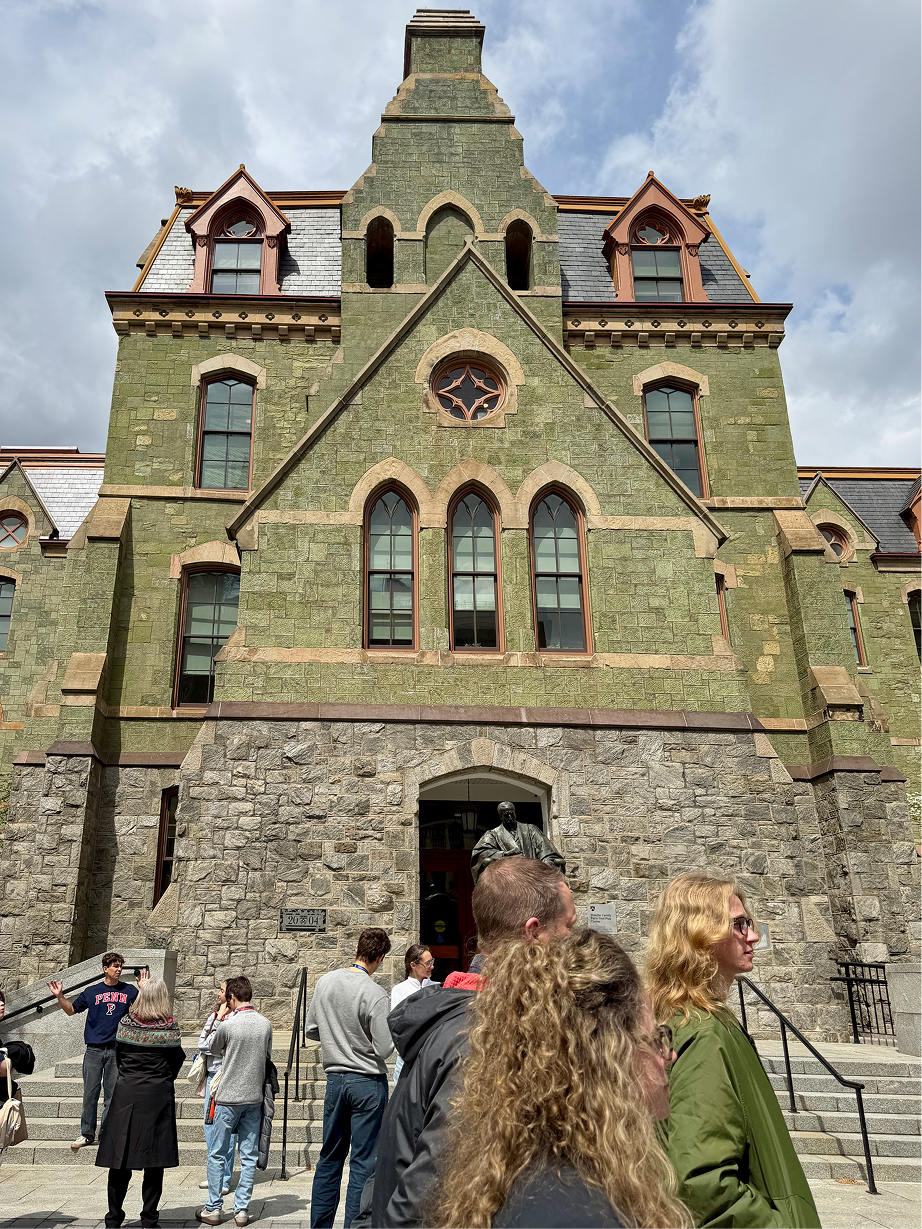
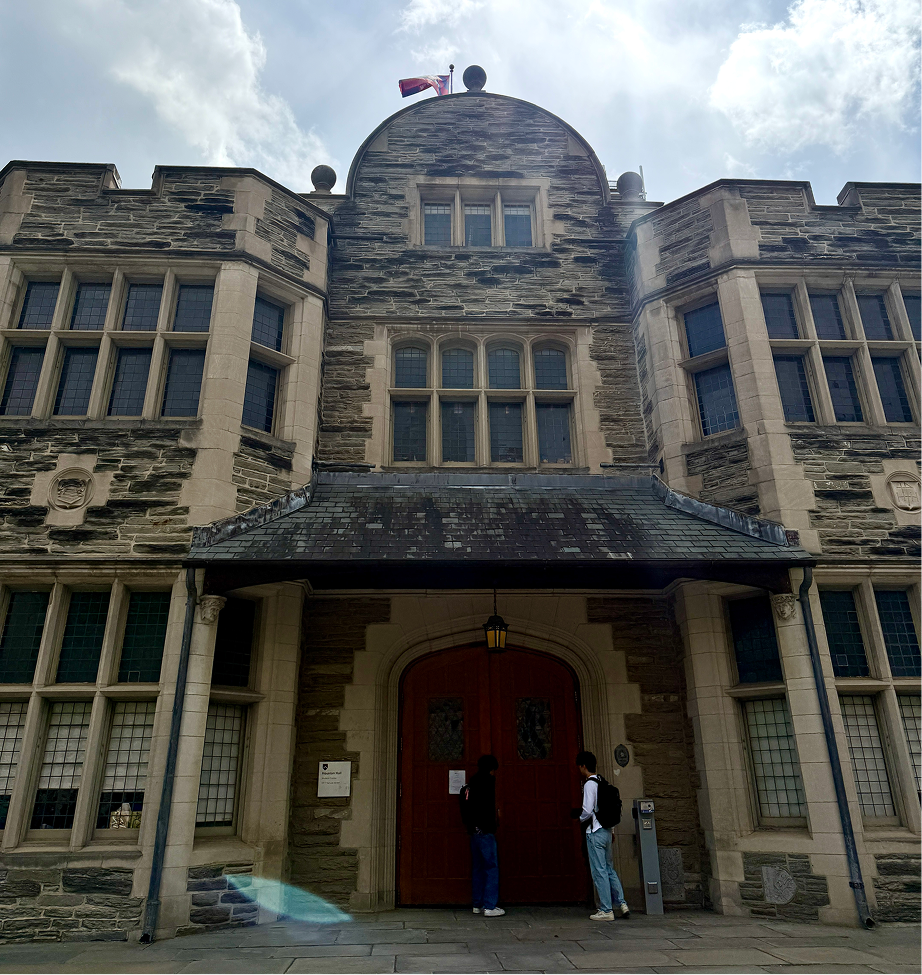
The campus is compact — 15 minutes end to end — and architecturally varied with some distinctive buildings, not your standard brick-and-white-column aesthetic. It's also quite green, so while it's very much in the city, it feels enclosed and genuinely campus-like. The main tour is outdoors only, so I only saw building exteriors. One of the freshman dorms (pictured later) is very cool. Greek buildings are scattered throughout.
Academics are organized across four undergraduate schools: Arts & Sciences, Engineering, Nursing, and Wharton. Students are encouraged to take classes and minor across schools. Undergraduate research is popular — 3/4 of undergrads participate, and research groups have designated undergraduate spots. Apparently the nursing school graduates have the highest starting salaries upon graduation.
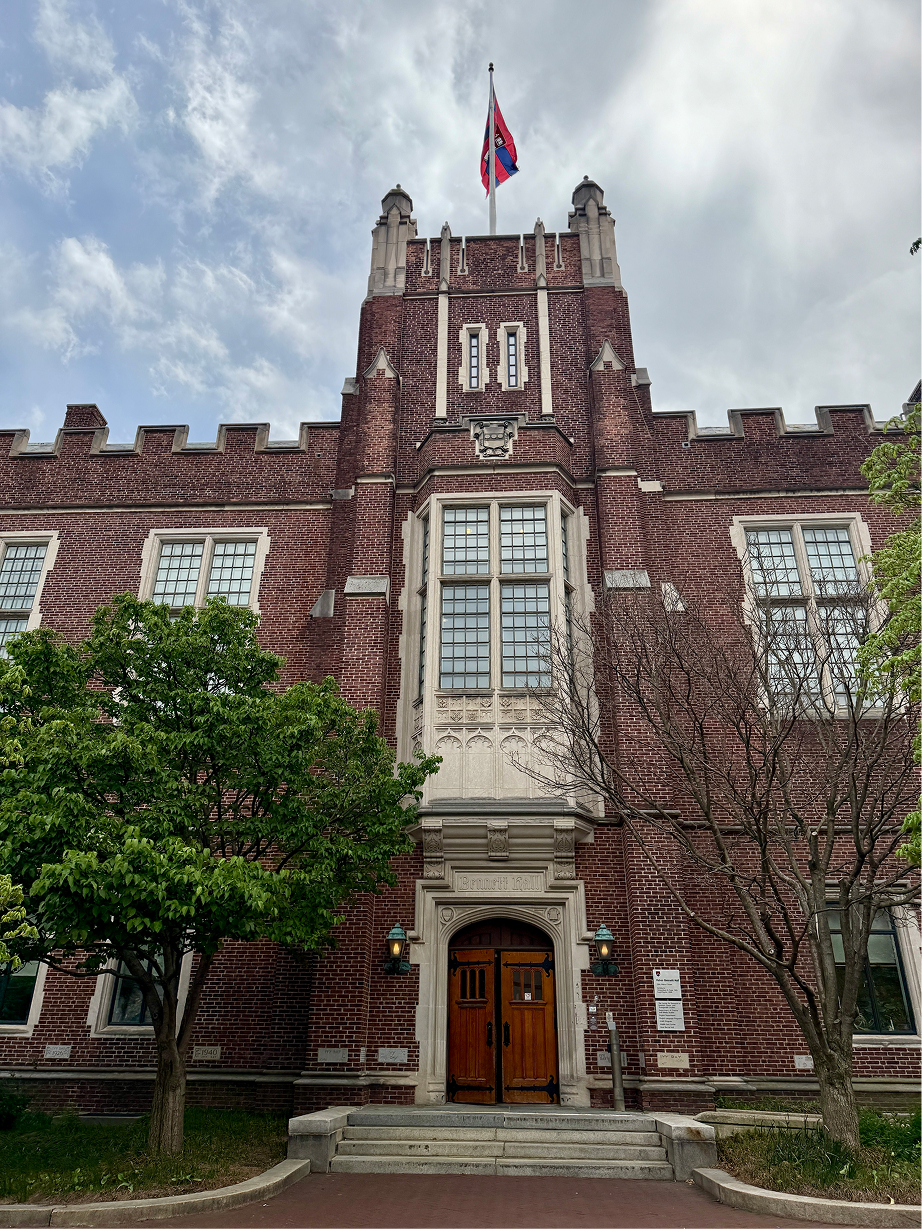
I was surprised to learn that students are only required to live on campus for one year, and a significant number move off after that — into row houses or Greek housing nearby. That said, dorms are beautiful from the outside (we weren't shown any interiors). With Drexel next door, the whole area feels student-centric and safe with easy public transportation connecting ‘University City’ to the rest of Philadelphia.

I asked our guide what type of student wouldn't be a good fit for Penn, assuming they were academically capable. His answer: someone who's an introvert and wants to stay one. I also asked about how dominant Greek life is and he said that while around 30% of students participate, it's very easy to socialize without getting involved and that he's found most of his social life through clubs despite being in a frat.
Penn has a ‘Mentor Meals’ program that funds free lunches or dinners between students and their mentors — professors, advisors, TAs, researchers. Apparently it’s so popular that spring reservations are already fully booked. That, coupled with strong access to undergrad research, seems to indicate a campus with strong access to faculty.
Engineering is on the smaller side, with hands-on classes from freshman year and small, tight-knit cohorts — around 75 MechE majors per year, about 20 in Materials Science. Penn also has the first AI degree at an Ivy. Senior capstone projects can be interdisciplinary.
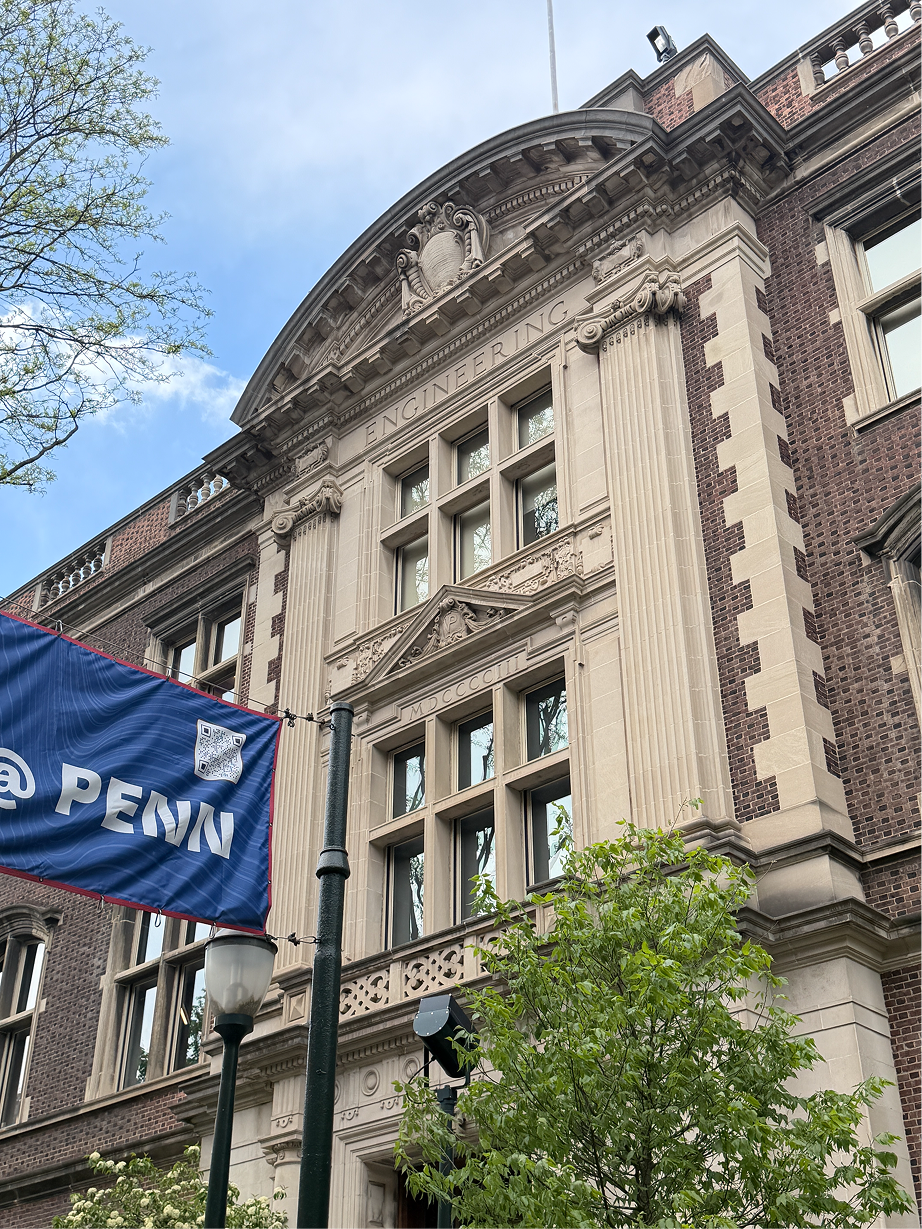
Our guide was a MechE major who, in her own words, doesn't like to build things, and doesn't plan to become a practicing engineer. She also noted that only about 50% of Penn engineers go on to practice engineering — many end up in consulting or finance. The Accelerated Master's is popular; most of her friends were doing it, and it doesn't add time if you plan early. Engineering at Penn as a whole is about 60% men, 40% women.
Switching majors within engineering is doable early on but gets harder after freshman year.
Overall, it seems like you get some hands-on classes earlier than in many of the big engineering schools, as well as smaller classes and easy access to research.