.svg)

Ringae Nuek: Welcome to Ways to College, A podcast for parents and students who want to understand how college is evolving and how it actually works, not just how to get in.
I'm Ringae founder of Waysmith. After 20 years in product design, I bring a strategist's instinct to this, understand yourself, understand the landscape, then decide.
On this show, you'll hear from higher ed leaders doing genuinely different things— rethinking curriculum, student support, career integration. You'll come away understanding what actually matters, asking smarter questions and making a decision that's genuinely yours.
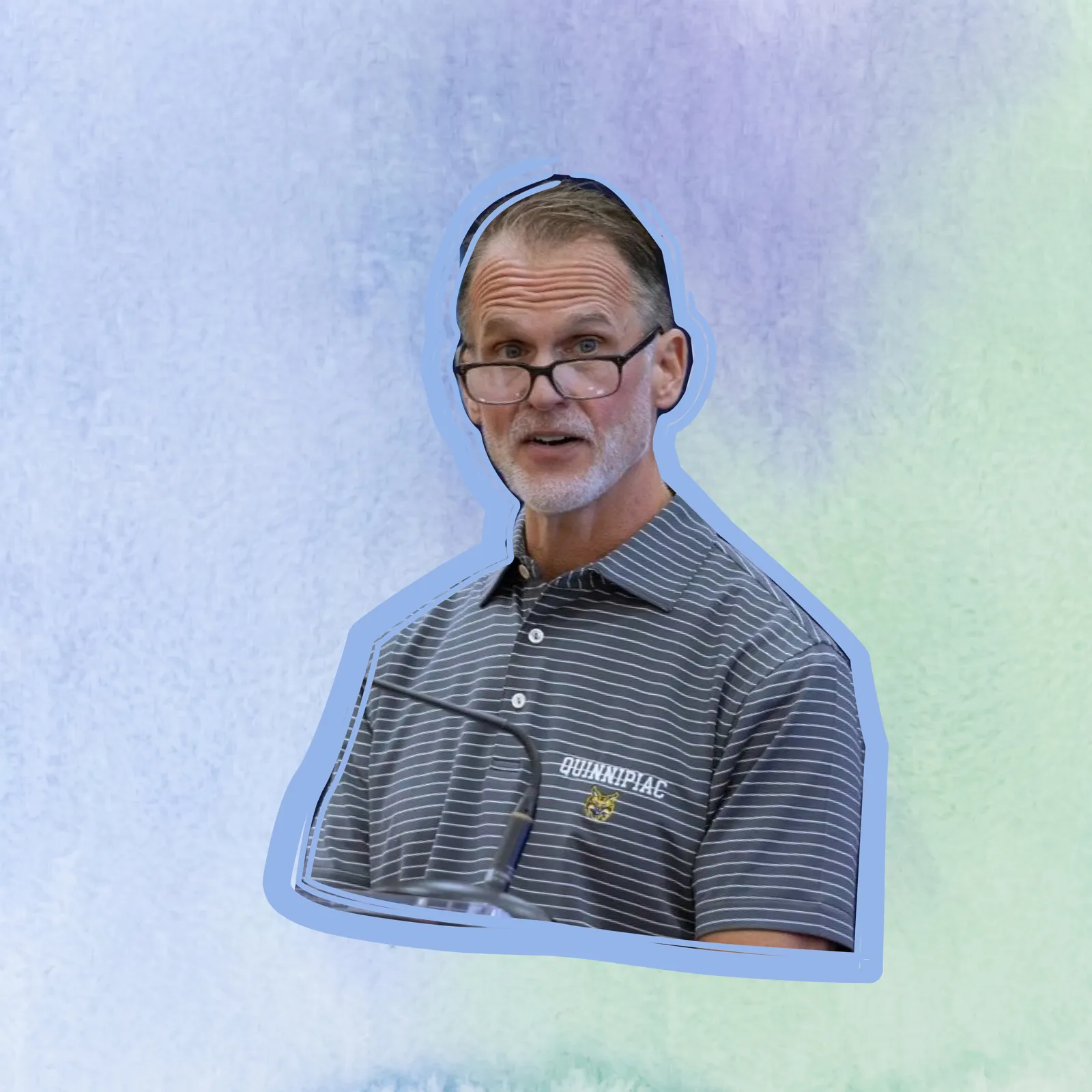
Ringae Nuek: My guest today is Tom Ellett. Tom is the Chief Experience Officer at Quinnipiac University, a role that didn't exist before he stepped into it in 2020, and one of the first of its kind in higher ed.
Before Quinnipiac, he spent nearly two decades at NYU helping to shape the student experience for tens of thousands of students. And what I love about his work is how creative and thoughtful he is about the student journey.
Hi Tom. Thank you so much for joining. I'm really excited to have you here at Ways to College. My own title for, for many years had experience in it, you know, as a user experience designer, I've spent a lot of time thinking about how you design user experiences and so I was. Excited to see that sort of way of thinking is starting to bleed into higher ed. I really wanted to hear about how you think about the student journey and actually whether you think about yourself as a designer at any level. but before we get into that, I'd really love to just hear your own journey into higher ed and then from there to where you are now.
Tom Ellett: Thank you so much. It's really a pleasure to be on as well.
Tom Ellett: You know, for me, um, didn't really know what I wanted to do with my career. I was the youngest of six growing up in a very homogeneous area, upstate New York. I was fortunate enough to go to, private school, for high school, and the only reason because the five other siblings all graduated from high school were on their own, and my parents said, uh, let's try an experiment.
Right. Uh, it was a good experiment in the sense that I, I went to A values driven high school. And so I think that embedded early in my career, that community was really critically important. it was a Catholic military high school, so discipline, and, the idea of honor, and faith were all part of that journey.
I met some of my best friends in life today from high school who I stay very close with the group of five of us. So from there, I went to a community college. I was a first gen. My parents didn't go to college, so my father had expected that I would take over his business or be one of the partners in his business.
I really thought about the whole idea of what it would be like to go away, to leave, Troy, New York. So I, I, I started at the community college 'cause I paid my own way. On the side, I was a singing waiter on a boat. theater was a part of my career, and, high school I was involved and I took courses at the community college in theater, and drama.
Fast forward, I finished, I transferred to a school in sunny Florida. I graduated in three semesters and I will give some advice early on. I, I had not been to Florida a great deal, but I had heard about the sun and the ocean. I didn't realize that Orlando was in the center of the state, so there was no ocean.
And I was living on the couch of my cousin who was at school, at that institution as well. And so I lasted a week, came back home and started working for my dad and realized that this was not my dream. and then tried it again and I transferred.
Tom Ellett: This time I went to an institution that I had a friend from high school who was there already and talked very highly of it. It was, Fordham University in the Bronx, a Jesuit institution. And furthered really my understanding and my belief that a college was about educating the whole person, mind, body, and spirit.
Cura Personalis is really the. Theme of Jesuit institutions. and I lived through that experience in such a deep and meaningful way. I became a resident assistant and I still had that theater bug in me though. I worked at Macy's Herald Square in Manhattan, during my undergraduate years and, had a great experience there, meeting really great people and really influenced on the culture of the campus and realized how important culture is to a campus.
It was a bubble campus gates all around it, so you were kind of stuck in there. and it really changed who I was. I had heard through that process that you could get a career. You could get a further degree through the career of higher education. And so I started on that journey. graduated from Fordham, went to Utica College where I stayed one year.
At the time it was part of Syracuse University in upstate New York. didn't have a master's degree, so it was a smaller institution that didn't require it. I started a journey in student affairs there, lasted one year. It wasn't a fit for me in terms of the values and in terms of the location and in terms of what I thought I could give to an institution.
Tom Ellett: So I, I then decided to live my dream and get my MFA in directing a theater. I went to Catholic University of America, where I worked full-time over the course of nine years, but in the first five, I finished my MFA, a terminal degree. And during it, you know, one of the lessons I learned very early on was how important the understanding of the audience is as a director. To really be able to walk in a room and sit there and feel the people around you. And I think that I've taken that lesson in all that I do. Right?
So if I'm talking to a group of students or I'm teaching a course, always being able to, you know, understand how connected I am or being connected to the students in the room. Are they paying attention? Do I need to change my tonality? Do I need to change my nonverbals? Do I need to, you know, do something electric to the room to get them to be kind of engaged? And that has stuck with me throughout my career.
Finished the degree. Got married, had my first child in the residence hall.
Stayed there for nine years.
Tom Ellett: And then I went to Syracuse University, where I worked for five years as the director of residential life. a great institution again, for me, value driven. I still remember the five core values of the institution. Diversity, innovation, service. Quality and caring and very much similar kind of value set as the Jesuit institution.
The Catholic institution, though it was a Methodist background school, but lightly attached, it was more comprehensive, than where I was at Catholic University. It was probably two and a half times the size. And, really, got to be at a part where, community was connected by athletics Division one institution.
Students were very much involved in competition and, community around the athletic. Community, which was very different than a Catholic U, which was, very much connected around service, and being in DC in, in terms of government politics. after five years at Syracuse, I was recruited by a search firm to go to New York University, where I was fortunate enough to work for 19 years, retired from there in 2020.
Tom Ellett: And, one of the formative experiences at at NYU is I started at NYU, six weeks before 9/11. And it, it really, and at the time, the vice president of student Affairs had left and there was a void of leadership. And so, my supervisor at the time was the associate Vice president and said, you're in charge of all the student facing things.
But it was, really transformative and understanding. The whole idea of mental health and support students need during times of crisis. and so during my 19 years at at NYU, I learned so much about, change and, how you create community in a, non, traditional institution.
We had. 14,000 resident students in total of 40,000 students. Now, I think it's 55,000 at NYU, but at the time, we had. A million people living among our residence halls who weren't NYU students. They were New York City residents. So we had to do something very different. We had to do some policy things, we had to do some community things, and we had to start bringing some traditional things that all students need as part of their developmental phase of being a college student.
You know, from anything from, you know, how do you meet and greet? How do you. really get to know people. How, how do you start to find your posse on a college campus?
We had, challenges, we had a series of suicides during 2003, 2004 that I worked, to help manage. and lots of other kinds of crisis that really, made me realize how important, we care for our students. And, and that really is, is probably the, the strongest ethic of anyone who works in my field is do no harm.
And so that was, A great 19 years for me. we, we really did some, we were honored by, numerous recipients of. Student Affairs awards for innovation and things that we did, to do things in a very non-traditional way.
Tom Ellett: There, fast forward, to 2020 during COVID.
I was recruited by the same search firm that brought me to NYU to think about, a new position called the Chief Experience Officer at Quinnipiac. It was the first. didn't wanna leave NYU, no reason to. but I think the, the allure to a, a position that was really from the journey process from high school student all the way through to handing 'em off to be alums, really gave me the opportunity to think really,
Significantly about how, what are the touch points that students experience and a smaller institution from what I was used to, undergraduate, we've got about 6,200 undergrads, 6,300, compared to, you know, 25,000 undergrads at NYU. So, it gives me a chance to be able to, Develop a, a reoccurring relationships because it wasn't really a con, a traditional student center at NYU, you, you could go meet someone as a freshman and never see them again until graduation.
Additionally, my wife and I live in the residence halls here at QU. and we've lived in residence halls for, 32 of our 39 professional years, 33 or so. and, and this. Has really helped me understand the culture of the place and who you run into at different weird times and days of the, times of the day here in terms of, engaging with students.
So that's a little bit of my journey. I'm in year six here. I think we've done some really, innovative things here. I think this is a, you know, a lot of people come and visit and say, wow, this is a hidden gem. and I say, hopefully we're not too hidden for too much longer because this is a place that really gives student voice.
Really strong with experiential learning. I think we've really focused on how we take care of students and our wellness initiatives, and students get to co-create with us in lots of ways,
Ringae Nuek: Yeah, I did. I was excited by the co-creation piece. I was actually in, in New York at the same time as you, I'm realizing. And I actually lived in the NYU dorms because it was. Kind of an easy way to just like land in New York for the summer. And it's funny you mentioned the bathrooms 'cause I just took that for granted. But that is weird actually, that.
I had my own bathroom.
Tom Ellett: It's a plus and a minus
Ringae Nuek: Well certainly for someone staying over the summer, I think it was definitely a plus,
Tom Ellett: A hundred percent.
Ringae Nuek: So I'm curious. With this new role as as chief experience officer, what do you think that you're able to see and stitch together that maybe in a different role you weren't able to do?
Tom Ellett: I think it starts with expectation setting and knowing that the expectations that you're setting with high school students, you're, also responsible for matching those expectations when they get here. There are certainly some times where there's a disconnect between those who market the institution, those who do the admissions process and those who are the caretakers, those in student affairs, who actually engage students to create a community with students, by students, for students. And here we meet regularly to talk about that, to ensure that we're aligned in what we say we're gonna do, and then we go and do it.
So those leaders are meeting with me and really setting the framework. How do we make QU the best possibly engaged experience for our students, one in which they will gain skills and competencies to be prepared for their calling, whatever it may be when they leave the institution.
Ringae Nuek: Okay. Do you see part of your role as sort of voice of the user where you like, report back what you're hearing in these sessions? Or, or how does, how does that work?
Tom Ellett: That's a great question. And you know,
Tom Ellett: I think the best way to be able to understand this student experience is to be around students. one of the things I did very early on. it was challenging, but we certainly did it. we started out with quads in the pod where it was COVID and we would bring four students together, distanced.
It was nice when we moved here in August and had conversations about things which led very quickly to an advisory board that I created. the advisory board really is open to all students and it's a chance for me to. go through in a linear way, with the students as they are. Experiencing that, which we just completed.
So pretty soon after orientation, I get a group of freshmen to meet with me on Sunday nights and we debrief orientation, What were the things that attracted you to the institution? So it's a lot of. real-time environmental scanning.
And from those meetings, which I have a freshman advisory board, I have an upper class advisory board, I have a dining services advisory board. I'm getting real feedback at the moment it's happening, and so we can use that data very quickly and earnestly to embed changes.
Education, and a lot of that is educating students on how they maneuver the institution. students for the most part, don't know what they need until it's. At a point where they really should have needed it a lot earlier, whether it be academic advising, whether it be career advice, whether it be mental health services, whether it be, you know, a nutritionist or dietician to help them with.
Maneuvering the dining plan, and so able to educate a group of students through the advisory board who actually become ambassadors for me and actually go out and do what I do individually to that group, to all of their friend group. And so the advisory boards have been really impactful and it can be anything from.
Hey, there, there, there's a, a brick missing in the walkway and get it fixed the next day. Uh, or it could be something larger like, Hey, the registration process is really difficult for us in terms of the wait list process, etc And then I go back to the registrar who works with me. And we talk about, okay, here's what we're hearing.
What are some of the solutions? And hey, would you like to come to the next advisory board and join me? So you can hear directly from the students as to what their experience is because you're hearing it, you're, you're hearing it one way, and they may not be able to, students aren't, you're not having a chance to articulate and go back and forth with students, but in the advisory board, you actually can.
Then it also takes the opportunity. To send the information back to the students to say, this is what I'm hearing. If you disagree, join another, you know, come to the advisory board, but here's why we're doing what we're doing. So it, it, it's, a way to help validate what it is that I'm trying to, to do for them or with them.
And I try to do things with them much more than just for them because there's a learning, Component to that for students when they help to solve a problem and get to take some ownership on that problem, it seems simplistic. But I, I do think it's a valuable part of the educational process that students start to take some ownership for their institution and they get to know how it works a little bit better.
And I think it can help them when they go into work in group settings in an organization that's complex and start to remember how do they maneuver? Who is the person I need to talk to to get things done at that organization I start working at? How do I get my voice heard? What's the role of assessment? In a good organization.
I mean, all those skills I think are really important for students to take with them, as they go.
Tom Ellett: And I try to talk to the students a lot about, trade-offs in this moment in higher education. Yeah, we can do X but it may mean we're not gonna be able to do Y and Z. So where do you prioritize? So a good example of that, students were, have been for a couple years asking about more time off during the semester? Well, institutions are accredited and need to meet contact hours, so many hours of meeting for the semester to become accredited. So if you start to give a student off for a wellness day in October and November and December of one each, there's three days. Well, you can't just take three days outta the calendar.
You have to add them back. So when I say to them, we have a week off for Thanksgiving. Do you want to only have Thursday and Friday off for Thanksgiving instead of the Monday, Tuesday, Wednesday to do this? So it's all about trade-offs, right? And, and I try to have them, understand that that's kind of the way they will face it in their own careers when they're in an organization and say, we can do this.
But at the expense of this and this and what's the best ROI on that decision.
Ringae Nuek: That's great. it does sound like you're very much designing things with them and bringing them along for the ride so that things aren't just. Handed to them kind of reminds me of this fact I read somewhere about how Japanese schools don't have janitors because the kids are responsible for cleaning them.
And obviously this is not that level of grunt work, but, um, as a result, they feel much more connected to the built environment of their schools and, and being responsible for it. it's the same thing here, where You understand the trade-offs and you're brought into the decision making, then it's no longer something coming in from a up high, and you accept why it is the way it is to some degree. What are a couple examples of things that you feel came out of this process that have worked especially well?
Tom Ellett: Yeah, I, I think, certainly for the dining experience, so much has changed in my time here with dining. you know, to the point where I. Three of our operations are managed by students for students. So they create the P&L, they hire and fire, they train, they supervise, and they build the programmatic aspect that happens in one of the three of the locations.
One is a restaurant pub that students who run it, manage it, bring in the entertainment, and co-sponsor with other clubs and organizations, but they run it from making the food, serving it, cleaning up afterwards and everything in between. and it's been fun to watch. when I got here, it was closed.
It had opened on March 3rd, 2020, the pub, and it closed on March 8th of 2020 'cause of COVID. and so it didn't reopen for two years, and the first year it opened, we had the food service operation run the pub, and now it's run by students. It's open two nights a week and it, it, it really has been a, a great journey for me to see the ups and downs, especially with the turnover of managers once they graduate,
How students think about their own business and serving their peers. When I got to QU there was zero students working in the dining halls. Now I've got over 250. The culture has definitely changed from a "you serve us" to, "we serve each other" and, and that's an important philosophical change, right?
So students are now seeing that they have impact on the dining experience on their peers rather than, you know, someone's coming in here and serving me, and my peers. And it's easy to complain about when other people do things, but when it's part of your community doing things for you, you have a different appreciation for the work, and the appreciation of the worker.
We've changed the, housing lottery system, which is being implemented this year based on student feedback. we've added a lot of things amenity wise, to a campus during my time here. and lots of other things related to, how students budget money and, the process of making capital investments at the university based on student interests, uh, has been something great to see as well.
Ringae Nuek: I noticed doing some research that you also have a parent panel that you consult with.
Tom Ellett: I do.
Ringae Nuek: How has that been?
Tom Ellett: It was during COVID and it was a chance for me to really hear what parents had to think about what they hear from their students. Now, remember, if you think about it, anybody needs to complain, right? Anybody needs, just as a human condition, we need to complain about things.
And you know, from 18 to 22 those who are in college tend to complain about things that they experience daily that may not be meaning it's the end of the world complaining, but when a parent hears it, it's the end of the world. And so I had a group of parents early on who had high expectations.
I was fortunate enough in, in the past four years to really get some parents who understood, how we can best work with students to get them to be very successful at the institution. And that's worked out really well for us. So I meet monthly.
We will, traditionally bring a guest on. we've had, a faculty member who's in charge of ai. We've had someone come from career area. We've had mental health and wellness, we've had dining services. We've had the registrar, we've had parking, we've had you name it. we've had a lot. The president, the new president is coming next month, to the advisory board to talk a little bit about her initial thoughts and feelings about the institution.
Her leading the strategic planning process that we're in the midst of right now. I think the parents, and that's anywhere between 18 and 24 parents who are in the advisory board. It's a good cross-section from all different class levels, and we are a comprehensive institution, one of 2.3% institutions in the country that have a law school, a med school, a business school, a health sciences school, a nursing, communications, computer science and engineering and business.
Very comprehensive, but yet our total population with grads included is under 10,000. That's very rare. Most comprehensive institutions are the 40,000 person plus, and so the advisory board is comprised of. Parents from all different backgrounds, their children, all different backgrounds. That really gives a richness to the conversation and it's really built some really great relationships among the parents as well.
They have helped in lots of ways. they have helped us see things, helped me see things that I may have not seen from a student perspective. They were the group that helped start the QStart process. So we have a, process where, when students deposit to come here, there's an engagement process.
We've hired students to be peer engagers with students and parents who will make phone calls, do zoom sessions or text messaging to those students who might have a question,
Ringae Nuek: Is it about course selection or this is about what?
Tom Ellett: This is about the, transition from being a high school student, paying your deposit and all of the tasks you need to do, before you show up in August. and that has significantly helped us reduce our melt. Melt is a term used in admissions. Those who deposit and those who don't come, those are the ones who melted away.
What we think is out there nationally is the melt rate is between 10 and 15%. and, you know, we were in single digits the last few years and I think a lot of it had to do with the level of engagement that we got feedback from, that we weren't doing very well, that we've really, I think, closed that gap A great deal.
Ringae Nuek: And that was something from the parents' advisory board,
Ringae Nuek: Thinking about, 'cause you were mentioning AI and helping that on-ramp into school process go smoothly through human contact. How are you thinking about, as AI starts to take over everything, balancing the human touch with the efficiency that potentially AI can bring in the student experience?
Tom Ellett: You know, from, from an academic standpoint, the provost, who's my colleague here, and her, deans and faculty members have done a really nice job of, of bringing AI into the classroom, a minor for AI and a series of, of classes being offered, here that have really, I think, begun the conversation and practice.
For students not to necessarily be afraid of AI and for faculty not to be afraid of it, and being able to incorporate it where possible in terms of the learning process. Right. and, and so we think it's critical that we be a leader in this because it's not going away and it's rather, it's good and important to know the potential and upsides of AI and knowing that there will be careers that may not exist today, just like 30 years ago, there were careers without AI that don't exist today, and so there's no, there's no real difference in that, except there's a powerful tool that may be helpful in things.
Think about research, think about the, the aspects of law and where it can be helpful. you know, in medicine, my wife's a nurse and, and, and certainly seeing some of the things that it can do will be really, really helpful and change and save lives because of it.
I think that we are using it, intentionally, methodically, and I'll say one thing, it's hard to stay on top of it because there's so much that rolls out.
So I think if you're open to it and constantly learning what it can do, then you need to continue to think about how do you teach students on what it can do and what it shouldn't do. At the end of the day, it's never gonna solve compassion, caring, service in terms of service of one to another. and, and deep reflection.
Humans are gonna have to take responsibility to do, caring for one another, being able to look in someone's eye and saying Good morning. I don't know. Even the AI companions that I'm hearing about are actually gonna do that and, and make someone feel loved and cared for.
Ringae Nuek: One of the things that Quinnipiac is quite known for is experiential learning. as a parent, not so much as an admissions consultant, when I, tour universities, everyone says, oh yeah, we have experiential learning. Right? because that's a, the buzzy phrase of the moment and everyone wants it, but. One of the things I'm always struggling to figure out is well, is it done well here? and I guess my question is what does done well? what can it look like? And how, as an outsider who's, got limited time, how can you tell if it's done well?
Tom Ellett: One is the longer term, okay. Where we do really well. How, where is a student 10 years after graduation? in terms of where they start out career wise and where do they end up 10 years? We do exceedingly well, similarly on the starting point and ending 10 years out and longer as it relates to return on investment.
In terms of the payment you made and where you're sitting right now. So those are, are important metrics. I, I think there are other important metrics that we, in all of higher ed needs to make sure we do really well at. The career focused areas that students are going into, and is there an alignment between what they're doing outside the classroom, internships, on-campus jobs, and on-campus leadership opportunities? Are they gaining skills and competencies that are aligned to those things? And, and I think that that is an area where we have done well as well.
Then there are those, and, and I don't like the term "soft skills," but I, I, I would probably say human relations skills and how do we do in those areas? being a good human being and caring about others, taking care of yourself, having some grounding in something you believe in that can be spiritually, that can be religious, that could be more zen thinking about something that's driving you higher level. The physicality piece is critically important, and the psychological piece is really important.
Being able to stand up for oneself to say, I need help. I've seen that as probably one of the hardest things for 18 to 20 year olds to do, maybe even older, that if you don't feel like you can do it yourself, you failed. And I make sure I tell that story often that that is not the case. The strongest person is the one who recognizes that they aren't where they want to be and look for other people who have the ability to help them to get there to do so.
I have an inordinate amount of one-on-one conversations with students. I teach two courses now here, a first year seminar, and now I'm co-teaching with the president of the university, a class on branding yourself, for your future self. And what I see a great deal is, and I think it has to do with COVID is a lack of confidence, or know how of how to engage in group settings, feeling comfortable in individual settings and how do we really think about that?
One of the things that I've had the pleasure of rolling out here is Listening Labs, and I'm really proud of the Listening Labs. it's a structured experience and I have four students who work with me on it. We go into classrooms, clubs, and organizations, faculty meetings, staff meetings. We actually did it with the university leadership where it's a series of 20, 40 or 60 minute engagements.
You can do any one of those, and it's a series of questions in pairs or in four persons where you talk about something low level. Could be anything from, what do you like to treat yourself when you're happy? What did you do that is memorable from last summer. Really easy questions. And as the questions go on, they become much more reflective. And there's a process where one person's a listener and one person's the speaker. And there are some prompts that are received.
And then the next series after the questions, there is an appreciation phase, where I take turns with the two speakers or the four, and we talk about what we appreciated, about what we heard the other person share with us. Now, the, the listener is very much only nonverbal. Can't interrupt, can't say anything except for, "Thanks for sharing," or "tell me more". And we learn this process and we've gone through and we evaluate, we do a pre- and a post-session survey, and the findings are pretty strong.
We are working with a consultant, Yael Shy, formerly NYU, who created this, and she's got it now at six schools. We're the second one to kind of incorporate it. It's maybe more than six at this point, but it's been a real movement of helping to enhance belonging, a sense of connection, enhance listening skills, and we find that those are happening, through these listening skills.
When these students, you know, you walk into a classroom, you know, when I taught in my previous institution, I'd walk into a classroom. People were talking, people are on their phone.
I've had to, to, to lead into strategies such as when people walk in the room, already beat them into the room and tape things on the front of the desk saying, turn to the person on your left. Say, hello. What was your favorite thing you did this weekend? Et cetera, et cetera.
It can be a struggle. And I talk to colleagues all around the country. This is not a QU phenomenon. This is a national phenomenon that students are not as skilled in being able to, Create conversation, to dig deeper and to feel comfortable sharing something that may make them feel vulnerable.
And, and so my hope is that hopefully next year we'll even expand this even further and deeper in terms of, um, those who are getting this experience of a Listening Lab.
Ringae Nuek: Yeah, I've noticed with this generation, to make broad sweeping statements, there's a discomfort with having a casual conversation that doesn't have a pre-approval. we can all sign up to go on a hike and then It's okay 'cause we all, signed up or we can all go to a crafting meetup and then it's okay, but you can't just turn to someone sitting next to you.
Tom Ellett: You know, feeling judged is really hard for our students today. And the other piece that I see a lot of, with young people is. catastrophizing, all thinking the worst thing possible at, at every moment in life.
And it's really about how do we reframe the synapses in the brain to start feeling more, thinking things more glass, half full. I have a life coaching background, so I do spend a lot of time reflecting and thinking about that. How do we intentionally structure things for student success? You have to actually create something. You have to sculpt it. You have to have a plan. You don't win the marathon if you don't think about what you need to do prior to the marathon. Same thing with community. Community's not just gonna happen. Now, something's gonna happen if you do nothing, and it may not be what you want, but at least if you have a plan, you may get closer to that.
That's why our living Learning communities is such an impactful thing for us, right? We have interdisciplinary living learning communities, we have discipline based, we have interest based Why they work so much. Yes, there's self-selection, right? So you can say, oh, well it's unfair because people who are gonna wanna be in it are gonna work to make it work. that could be true. But it doesn't mean it's gonna be true. And, and what happens is that, you know, the day you're walking into that floor for the first time, that everyone has a shared background as it relates to, I'm a nursing student, if they're in the discipline based, or I'm a computer science student, an engineering student, or, I'm really interested in sports, one of our interest based or wellness.
Ringae Nuek: I think it goes back a little to what I was saying where like, you've given the permission. It's like the meetup, you raised your hand, so now you're allowed to communicate.
Tom Ellett: You were from New York. you know about the meetups they have, online, book club meetups and all of those things. That was big in New York back when I was there, and it was something that we took advantage of and we tried to implement it that way at the university.
Ringae Nuek: So I live in San Francisco, and there's a lot also like very intentionally tech-free meetups happening now with Gen Z and I can see that becoming even bigger.
Ringae Nuek: I wanted to go back to, I, I really loved what you were saying about this branding class. my approach to admissions consulting is. very much let's start with the self-reflection piece and let's really spend a lot of time thinking about. Who are you? What energizes you?
let's not focus on major so much, but what are the sorts of things that you like to do, the sorts of things that you're good at, who are you showing up as in admissions, but also just generally when you enter college so that you can have a plan that's tied, a loose plan, you know, which of course will change possibly even radically, but at its root it should be tied to your values and your, your energy so that you can find your way through these four years in a way that's true to you.
And I, I do think that there's so much more that could be done with this sort of life design, both before and, and like when kids enter college, but then on that off ramp, right? So that when you're showing up in an interview, you're not listing off a set of skills on your resume, but you're really telling a story about who you are and how everything you've learned. how the pieces all tie together I feel like that's really a lacking piece often.
Tom Ellett: I would say that, you know, it, it's probably offered at most institutions, but it's a student has to seek it out rather than embedding it in the experience. It's hard at times for higher education to all join hands at an institution and all swim in the same direction because we all have had a different formative experience in our educational journey.
Those who work at an, at a higher education institution. Right. So I, you know, as I mentioned, I was very much impacted by the Jesuit education and by the theater background that I have and life coaching. Well, there are other people who have other kinds of experiences and they want. People in general want to replicate what made them successful to other people instead of, empirically proved success.
Now, humans are humans, so there's gonna be maybe needing different varieties of that because of our, Our extroversion, introversion, our doubting Thomases, our sensing, our feeling. I mean, all of those things play a role too, in in how, you know, why, why do two students who are roommates, who might have the same ra, who who might be involved in the same clubs, who might be eating the same food, have two very different experiences.
So the design has to be, when you're thinking about the design that, that I think about, it has to be broad, right? And, and it can't be, a cookie cutter approach that, okay, here's how we do it and here's how we do it. But I think that's why it's so important for me to have lots of opportunities for students to have me, to be hearing the stories of many, many students.
Ringae Nuek: What questions do you think visiting families should ask when they're on a tour or in an info session that will give them deeper insight into the college Any top things?
Tom Ellett: A question that I always ask as a parent of two young men who went to college is, you know, what differentiates this institution from another institution? What do you think you're doing that other people aren't doing? You know, where's your innovation?
How do you involve students in the decision making process at the institution?
What opportunities do students have to, leave a legacy at the institution? How would my student feel cared for at your institution? Those are some of the things that, that stand out to me in terms of important questions to ask.
I do think that the focus on wellness and mental health is really, really important. It's not only about how many counselors you have or what's your ratio, but more about what innovative things are you doing to engage students who may not otherwise engage. I mean, you, you, you really wanna think about, because for the most part, a higher ed is replication of higher ed. Of higher ed. Of higher ed,
There, it's all the same until it's not. And where are those institutions that are doing something and testing it? And I think that's an important feature.
And I do think that. the zen factor of a campus is important. Are there places where students can be alone and reflect? you know, are there little benches and gullies and little things they can look at? Are there mountains nearby? Are there bike paths? you know, is it a healthy place? tho those are all important factors.
Ringae Nuek: Right.
Ringae Nuek: What's something you're excited about for this year?
Tom Ellett: I'm excited about our strategic plan. we're getting close. we probably have another iteration or so to go before, and I do believe this new president is just. An electric, personality. I mean, she's just so, effervescent and out there and, you know, she's a communications background, so she's on Instagram all the time with students and really showing the fun side, of the institution.
But also showing the importance of, preparation to be successful. and that's important as well. I'm excited about the new students who come here. I'm excited about. some new curricular offerings that we're making, our embeddedness in AI, and how far that's gone in a very short period of time.
We're a nimble institution and so, we have been out in the, in the gate on some, some programs ahead of other institutions that I think are gonna make a difference. And, I think our differentiations will become crystal clear in this strategic plan. So, it should be out by, let's say the end of the spring semester. And so we'll be rolling it out.
You know, our, our QU poll continues to do really well and getting our name out, our, our teams are doing really well, our women's and men's teams. and that creates a level of spirit. Among the place. But more importantly, we have lots of students who wanna take care of themselves, and, and through the nature we have on the campus, our physical, attributes. And our rec and wellness activities have really been a, a game changer here at the institution, a lot of which are led by students for students, which is great. A lot of students are getting certificates to be able to teach, and get in there, do spin lessons and coaching and other kinds of things.
Ringae Nuek: All right, great.
Ringae Nuek: Any questions for me?
Tom Ellett: I really appreciate the opportunity to share a little bit about this hidden Gem Quinnipiac. It's, a place that cares student by student, one at a time. And, if anybody's interested, please send 'em my way. I'd love to chat with some parents and students, give them the, the red carpet treatment when they come to visit us for sure.
Ringae Nuek: Yeah. Great. Well thank you so much.